

OUTLINE
Genre:
- Letter: sometimes referred to as Epistles
- Written in response to a specific need or circumstance.
- Written in response to a specific need or circumstance.
Context:
- Author: Written by Paul (with Timothy- his disciple)
- Around 61 AD; about 30 years after Christ’s death; original generation still alive
- One of 4 letters written while Paul is in prison in Rome
- Original audience:
- The Christians in Philippi;
- not one church; lots of small churches within the city
- The Christians in Philippi;
- What was going on?
- They had sent their member, Epaphroditus, with a gift to deliver to Paul. Paul wrote the letter to thank them for their support/encouragement while he’s imprisoned.
- Paul was also concerned about coming persecutions and the members not all getting along→ written to instruct them to work together
- Bonus: Read Acts, chapter 16, for some of the historical accounts in the Epistles
Observe: What’s Happening?– What is the text saying?
- Vs 1- likely repeating them things he taught them in person
- Conservative Jews saying you needed to be circumcised still; Paul is refuting that
- Don’t need to put confidence in a physical process anymore; Paul is making it clear this is no longer what marks them as the people of God
- Ie- circumcision (way of marking that their people was set apart; belonged to Yahweh)…..Jesus coming abolished the law and need for this
- Vs 3: The Spirit allows us to circumcise (i.e. purify) our hearts
- The Spirit is now what marks followers of God instead
- God is already alluding to in the OT as part of his plan:
- Deut 10:16, Deut 30: 6
- Will be giving a new heart from the new covenant by the Spirit
- Jeremiah 31:33, Ezekiel 36:26-27
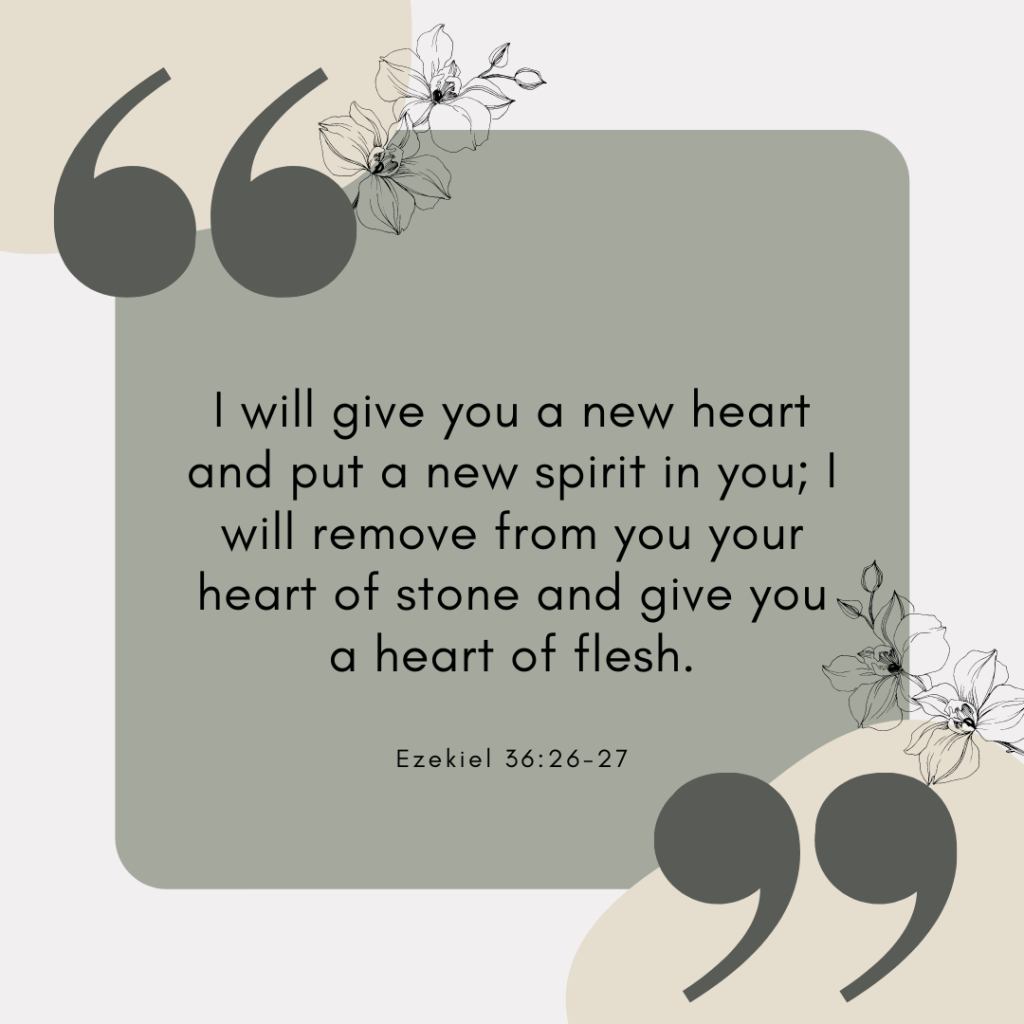
- Ez- “I will give you a new heart and put a new spirit in you; I will remove from you your heart of stone and give you a heart of flesh.”
- Jeremiah 31:33, Ezekiel 36:26-27
- And if anyone could boast in worldly things, it’d be him; but he doesn’t; he considers all those things loss compared to knowing Jesus
- You want confidence in the flesh? Paul can boast of worldly confidence
- Pharisee (strictest of Jewish sects)
- You want confidence in the flesh? Paul can boast of worldly confidence
- Knowing Christ intimately (along with his suffering and resurrection)
- But it’s a process, hasn’t obtained perfection
- Vs 10- I want to know Christ
- “Know”= intimacy, covenant
- Interestingly, Paul also connects knowing Christ to sharing in his sufferings
- Though divine, Christ sacrificed himself for us
- We’re to imitate Christ
- Don’t listen to false teachings; they’re led by passions
- Vs 15- Maturity
- Common for philosophers of the day to admit they hadn’t reached perfection, though they’d still contrast the difference b/w the mature and novices; advanced students as mature
- Vs 15- Maturity
- Ultimate citizenship is in heaven
- Vs 20- they would have understood being a citizen of a place they’ve never been to
- Philippi was a Roman colony; therefore legal citizens of Rome, along with its benefits
- Vs 21- the Jews regarded resurrection to include the entire body; but this idea would have been foreign to the Greek and Roman
- Vs 20- they would have understood being a citizen of a place they’ve never been to
Interpret: What does it mean? What is the central lesson the author wanted to communicate? What does it teach us about God?
- Identity: in the flesh and in this world, or in our relationship with Jesus?
- Having cultural status isn’t ultimately what matters
- Whatever were gains before, Paul now considers loss for the sake of Christ
- Knowing Christ is better
- Vs 8- “because of the surpassing worth of knowing Christ Jesus…for whose sake I have lost all things”
- Liken to a love relationship, or a child: you thought life was good/fine but then you can’t imagine life w/o
- This relationship is important/life changing
- Relational: Intimacy with Christ
- Vs 10- Paul desires to know Christ; vs8- a loss compared to knowing Christ
- Greek word “know”= ginosko
- Relational: Knowing Christ in the sense of having a relationship of faith and trust; recognition of his divine person
- John 10:14-15- my sheep know my voice
- “I am the good shepherd; I know my sheep and my sheep know me— just as the Father knows me and I know the Father—and I lay down my life for the sheep.”
- You recognize the voice of someone you know vs a stranger
- Knowing- also connects to the concept of Covenant, but we’ll cover that separately
- Pressing On – Athletic Imagery
- Remember, a Greek audience.. Philippi located in modern day Greece
- Vs 12-14- “I press on”- it’s a process; not about reaching perfection
- Paul’s goal: vs 10 & 11
- Vs 13- If you’re running a race to win, looking behind slows you down
- Vs 14- winners were typically called up for their prize; in this case the prize is heaven
I press on toward the goal to win the prize for which God has called me heavenward in Christ Jesus.
Philippians 3: 14
Application: What does it mean for you? Personal application
- Are there “worldly” gains you still cling to for worth instead of your identity in Jesus? Do you remember life before “knowing” Christ?
- Would you consider yourself to “know God intimately”? Like in Jesus’ parable about the sheep, do you think you would know His voice? One of the ways we can know God’s voice is knowing what He says in the Word.
- In week 1, we talked about sanctification and how it is a process of becoming more like Jesus. Do you feel pressure to have already arrived in terms of your character, knowing the Bible, knowing God, etc? What sorts of things cause you to look behind or slow you down in moving forward? What does this concept of simply pressing on, and knowing even Paul hadn’t arrived, do for you?
- Did anything else speak to you from the reading?

 The Priscilla Initiative